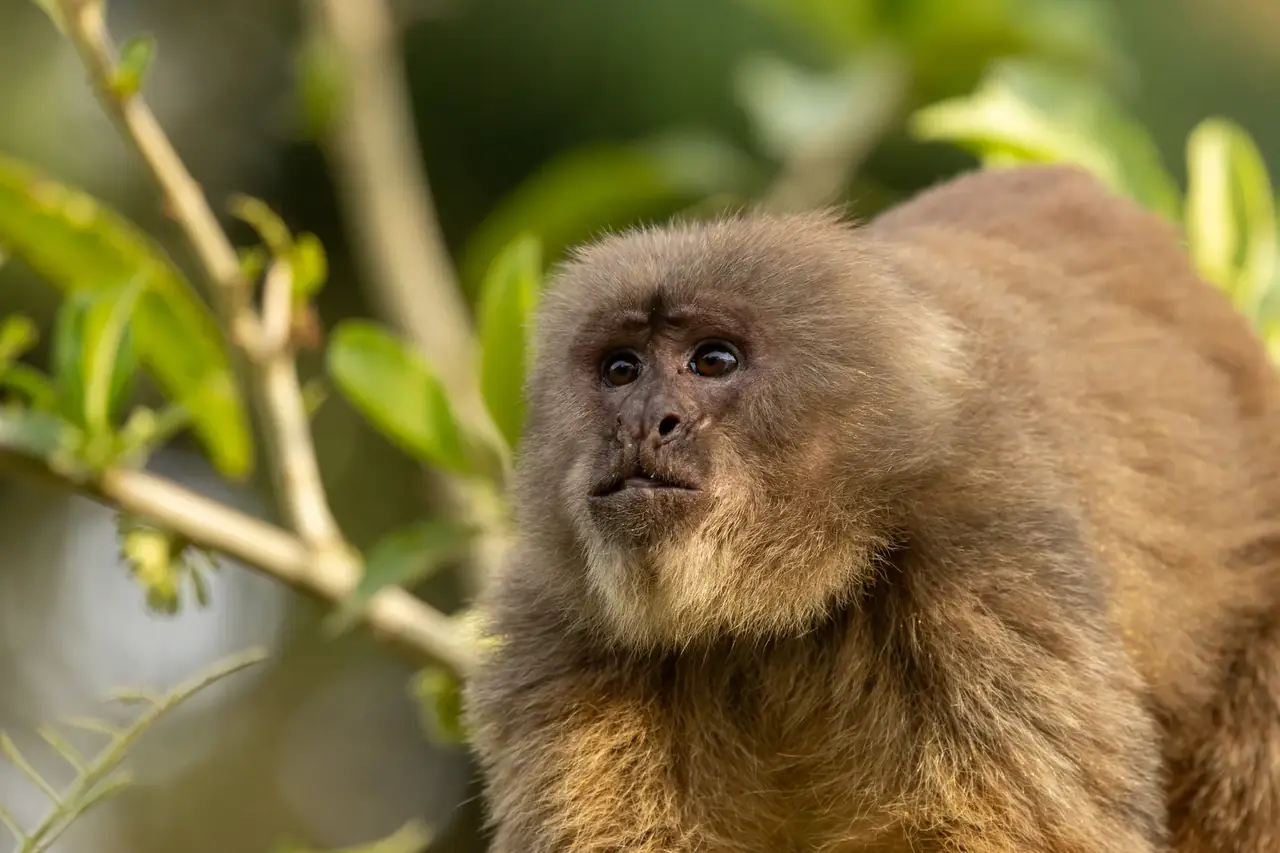
Cebus aequatorialis. La Hesperia.
Fundación Tangaré / Publications
Publications
Papers, theses and presentations from research carried out with the Foundation.
Peer-reviewed articles
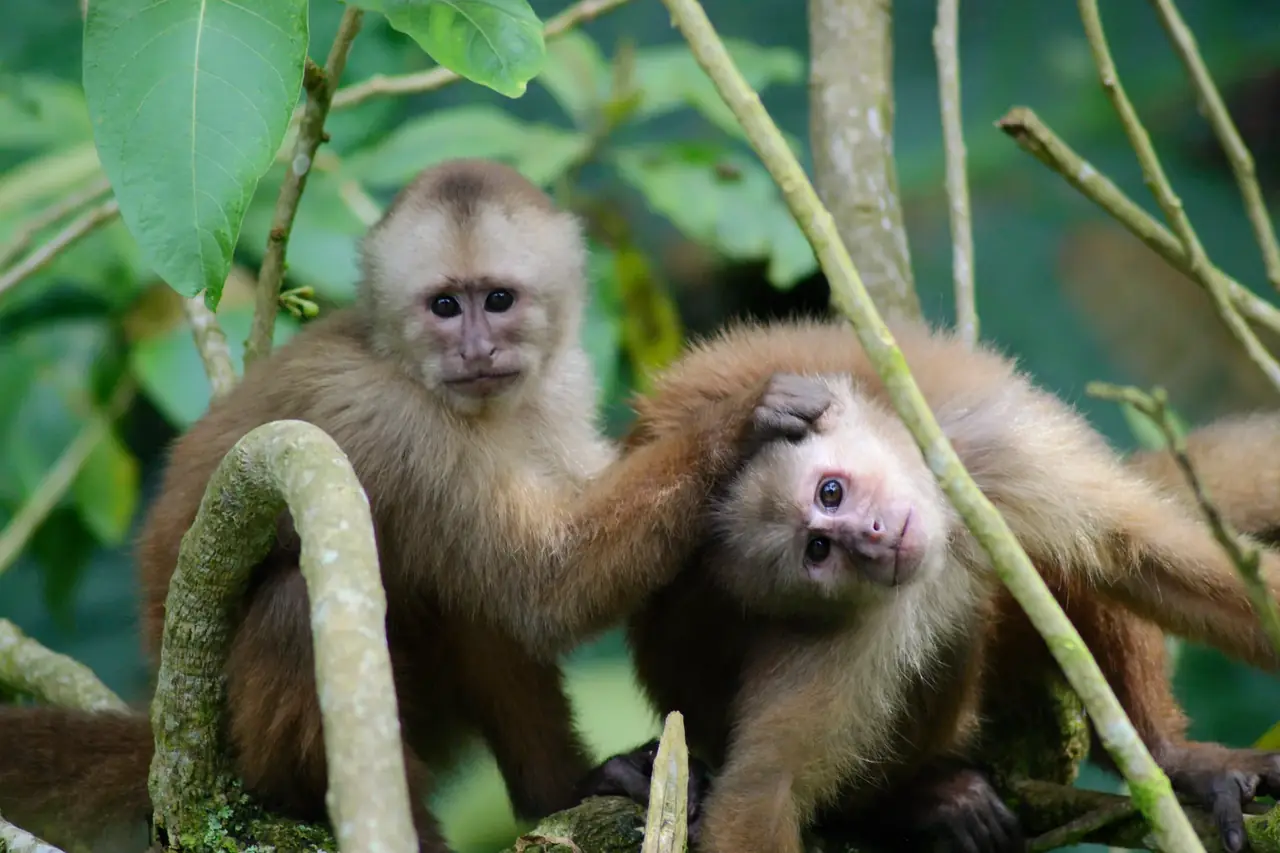
Hannaoui, N. H., Amici, F., Hoeneisen, A., & Llorente, M. (2026). Behavioral contagion in wild Ecuadorian white-fronted capuchins (Cebus aequatorialis). American Journal of Primatology, 88, e70122. https://doi.org/10.1002/ajp.70122
The study followed a wild group of 16 capuchins at La Hesperia and found that individuals were more likely to scratch after seeing a group member scratch. No yawning was recorded during the study period.
Open-access article. The authors are affiliated with the Universitat de Girona, Leipzig University, the Max Planck Institute for Evolutionary Anthropology and Fundación Tangaré.
More about the Ecuadorian capuchin and this study
Conference presentations
Findings of the capuchin study were presented at the XIX National and XVI Ibero-American Congress of Ethology and Evolutionary Ecology, held in Seville, Spain, from 2 to 5 September 2025.
Theses
Hannaoui, N. H.
Master’s thesis on behavioral contagion in a wild group of Ecuadorian capuchins, with fieldwork at La Hesperia in 2024. Its results became the 2026 article above.
Inventories and reports from the field site
Work carried out at La Hesperia that forms the basis of the site’s species lists. Summaries are on our biodiversity page.
La Hesperia (2026)
Field surveys of seven groups of organisms in two areas of the reserve, 2025–2026.
Adams, I. (2024)
Field guide to the frogs of La Hesperia.
Brouwer, D. (2019)
Herpetological inventory of La Hesperia.
Winton, R. S. (to 2012)
Long-term bird checklist of the reserve.
Silva del Pozo, X.
Butterfly inventory of the reserve (about 90 taxa from 62 genera).
Zak, V.
List of plant genera of the reserve.
Working with our data
If you are a researcher and would like to use data collected at the site or collaborate on a publication, write to us.
This work continues because people choose to support it
You can fund it with a donation, or take part in it as a researcher, intern or volunteer.