
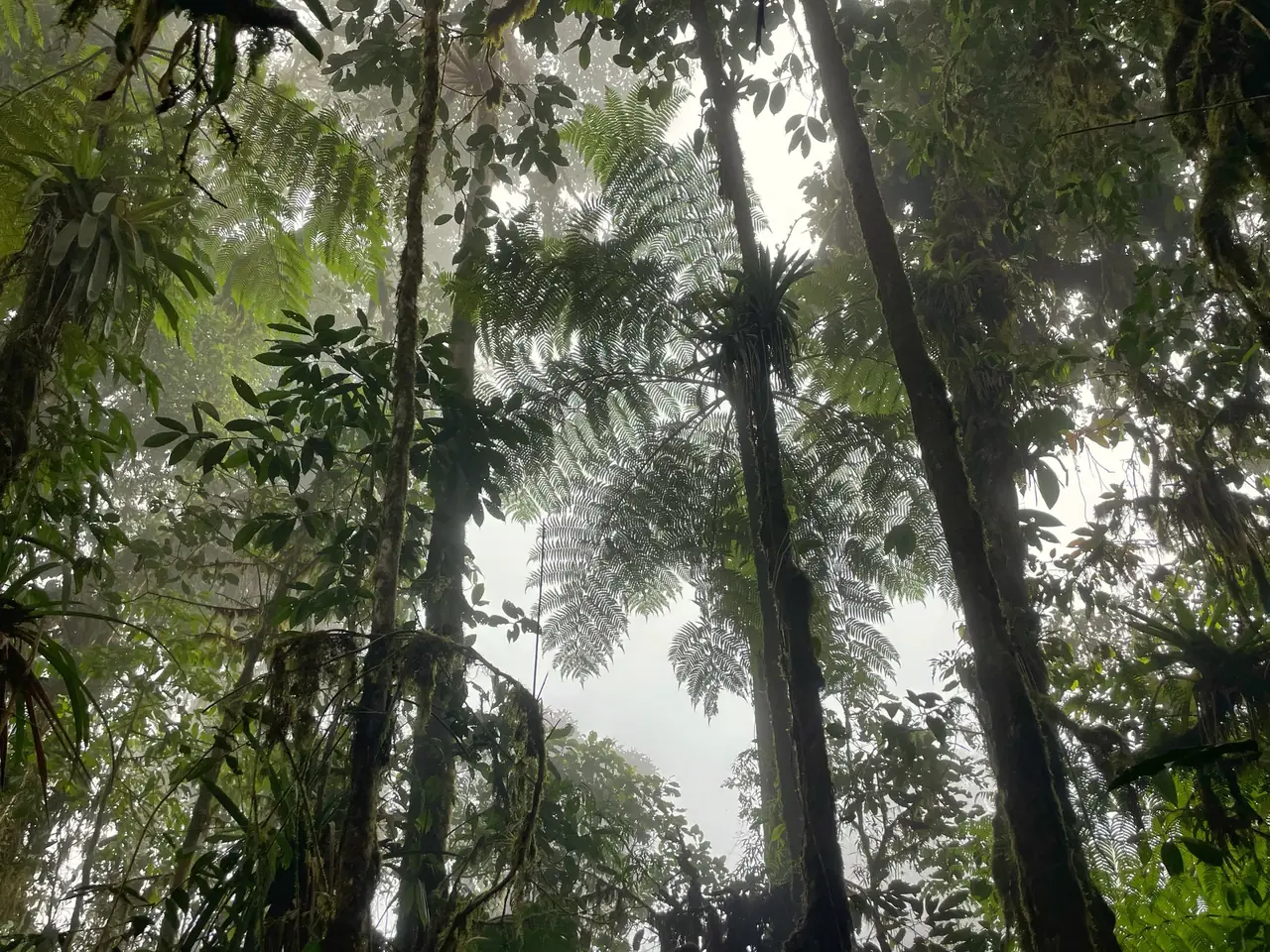
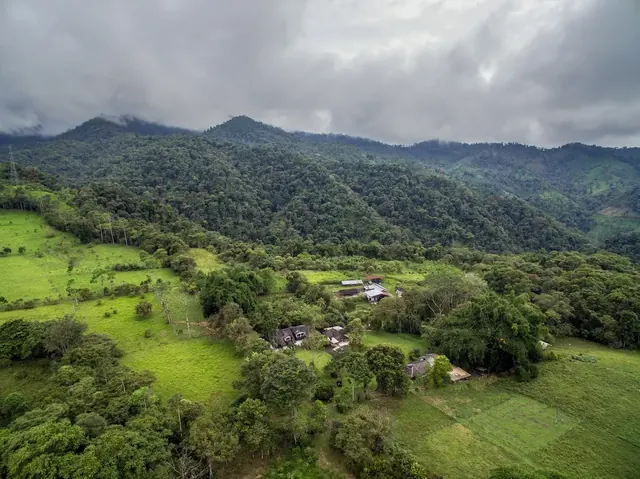
Cloud forest canopy at La Hesperia.
Fundación Tangaré / The cloud forest
The cloud forest of Ecuador’s western Andes and the wildlife that depends on it
We work in 700 hectares of protected cloud forest at La Hesperia reserve, on the Pacific side of the Andes, the meeting point of the Tropical Andes and the Chocó. This is what lives there, what threatens it and what we do about it.
Why this forest matters
A short stretch of mountain where several of the richest regions on Earth meet.
The forest lies inside the Toachi-Chiriboga Key Biodiversity Area, in the Tropical Andes biodiversity hotspot, the region of the world with the most species of plants, birds and amphibians. It climbs from 1,100 to 2,040 m and passes through three forest ecosystems, from evergreen piedmont forest at the bottom to montane cloud forest at the top, where every branch carries moss, bromeliads and orchids.
Between 2,000 and 3,000 mm of rain fall here each year and the forest spends much of its time inside the clouds. Cloud forest catches that moisture and releases it slowly into streams, so protecting it also protects the water used downstream. Protecting water sources is written into the Foundation’s legal name.
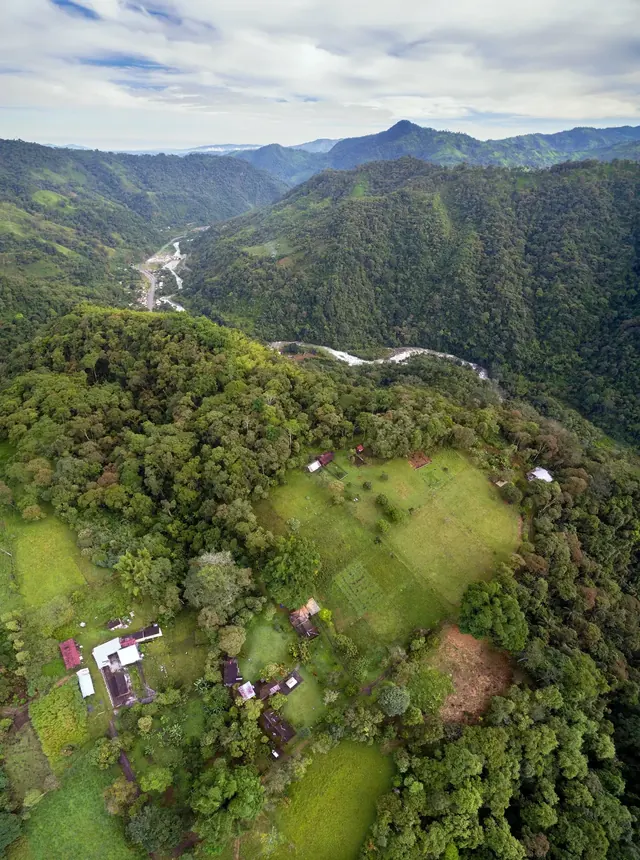
This is not a national park. The forest has been protected privately by La Hesperia since 1971. It belongs to the Puma Biological Corridor, a regional effort to keep patches of forest linked along the western Andes. Part of it lies within the Toachi-Pilatón Protective Forest, and part is enrolled in Socio Bosque, Ecuador’s national forest conservation program.
Species we follow closely
Our monitoring concentrates on animals that need large areas of healthy forest.
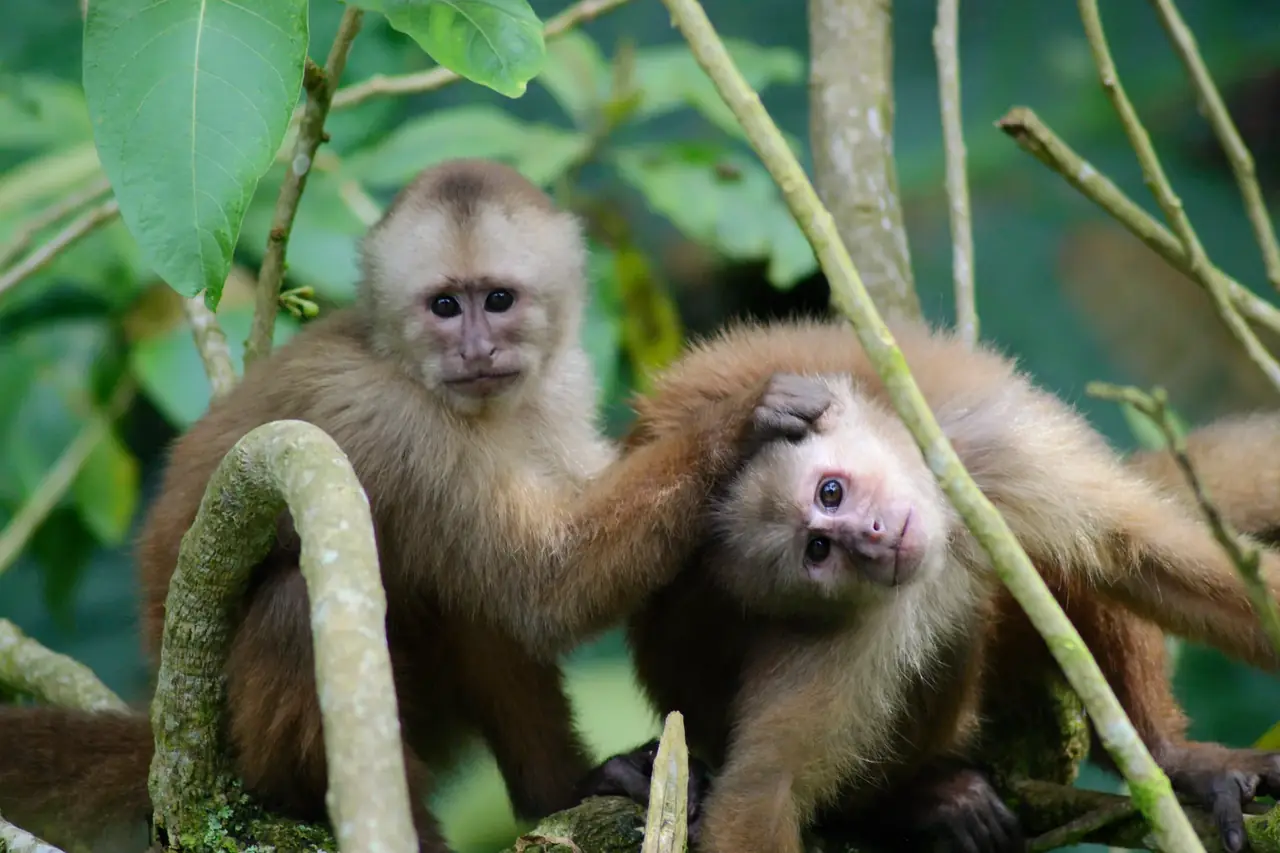
Ecuadorian capuchin
Cebus aequatorialis, Critically Endangered and gone from much of its original range in western Ecuador and northern Peru. At least four groups use the reserve and each monkey can be recognized, which is what made the 2026 study possible.
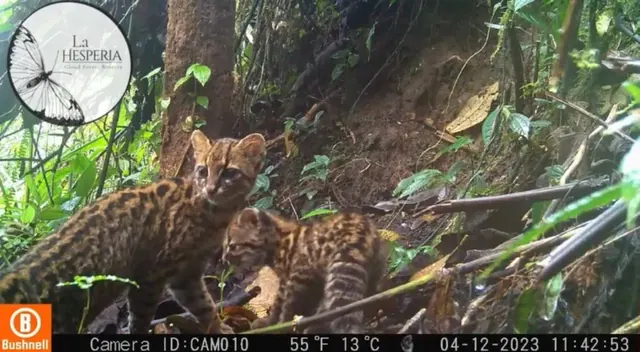
Clouded tiger cat
Leopardus pardinoides, a small spotted cat first described as a separate species in 2024, whose montane forest habitat keeps shrinking. Our camera traps have recorded it for more than three years.
Andean bear and puma
The Andean bear (Tremarctos ornatus, Vulnerable) and the puma (Puma concolor) are the largest mammals on our cameras, which together with field surveys have also picked up the tayra, the collared peccary and the ocelot. Large carnivores are the focus of the camera-trap work.
Rain frogs and glass frogs
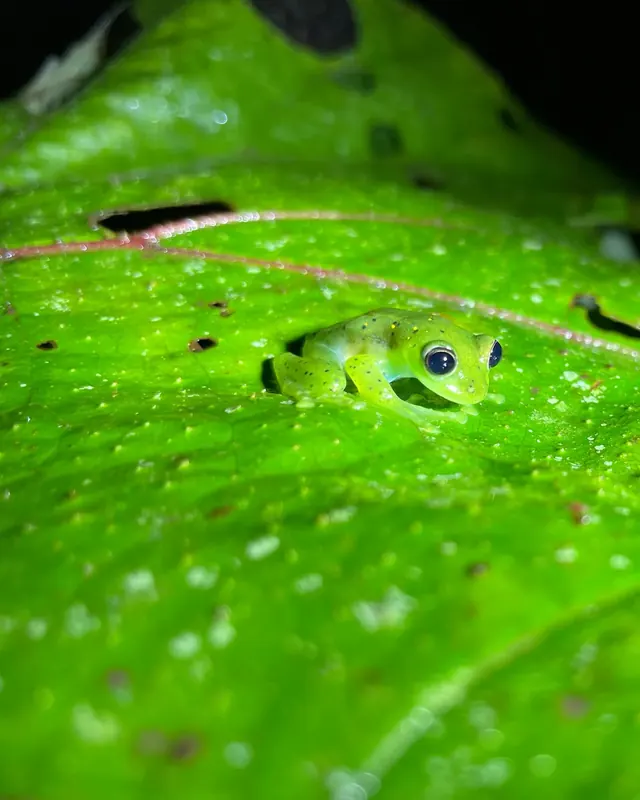
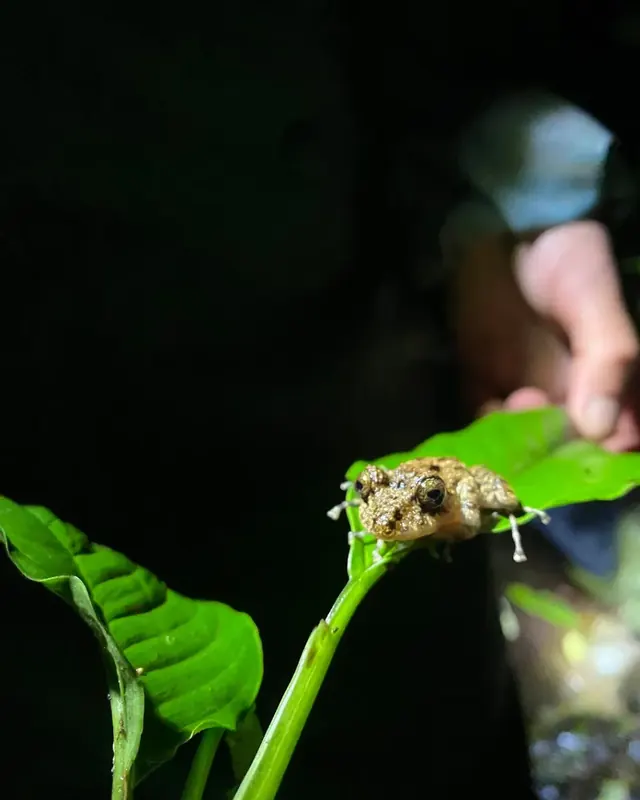
Pristimantis rain frogs develop straight from egg to froglet, with no tadpole, so they depend on a forest floor that stays wet and undisturbed. Pristimantis crenunguis and Pristimantis cf. pteridophilus, both found only in Ecuador, are Vulnerable.
The Ecuadorian capuchin · The clouded tiger cat · Full survey results
What has been recorded
Counts from La Hesperia’s species lists. They grow every year, because a cloud forest holds far more life than any survey can document.
297 bird species
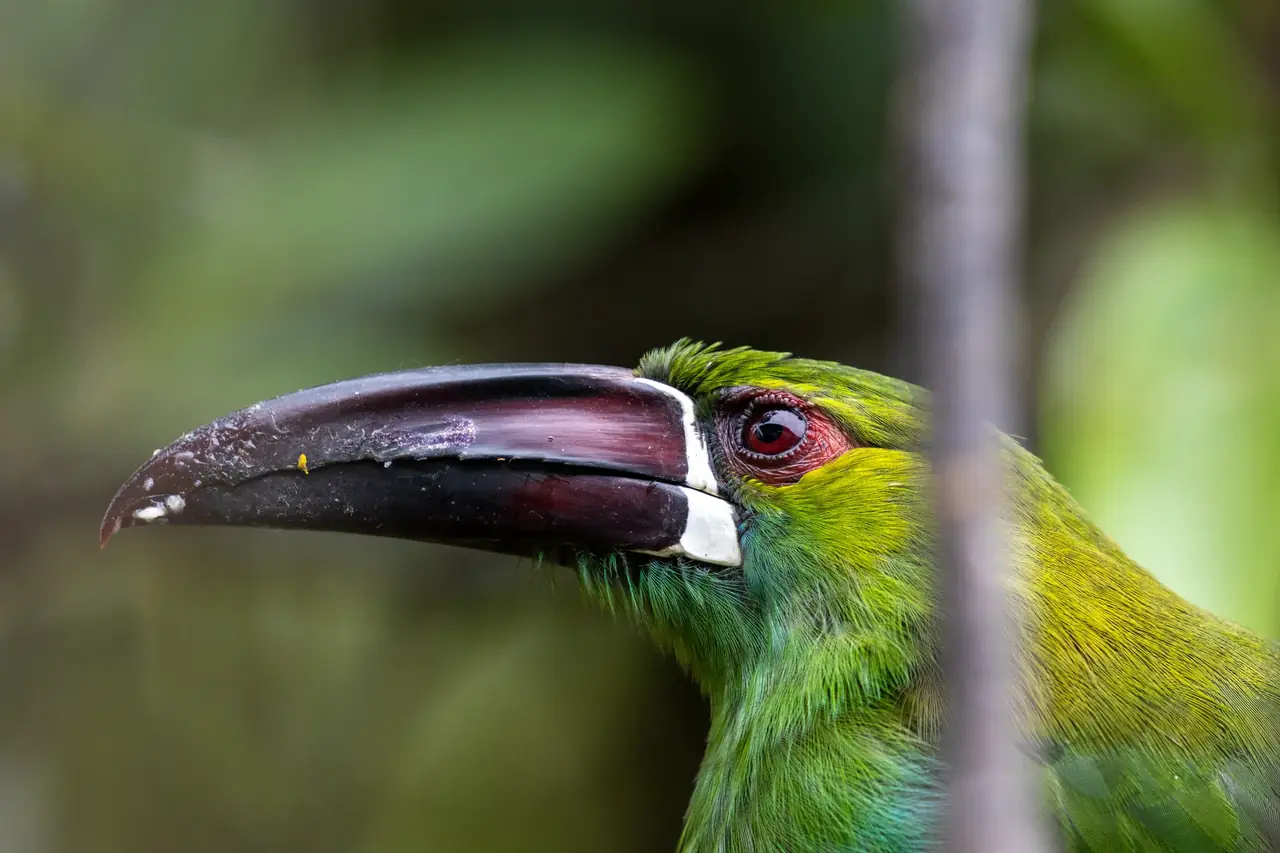
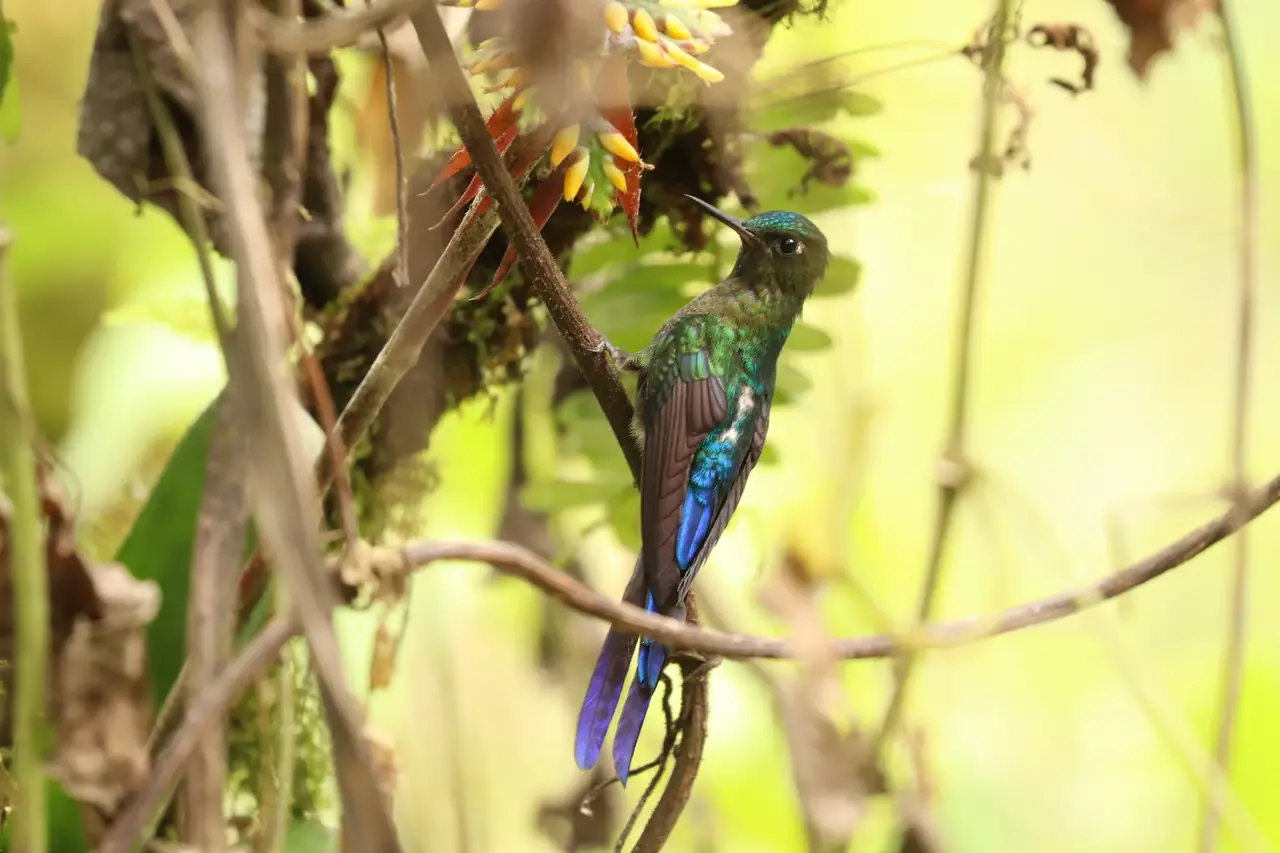
Chocó and Andean species share the forest, with 31 hummingbirds, 21 species of restricted range and boreal migrants. Records include the Plate-billed Mountain Toucan (Andigena laminirostris), the Wattled Guan (Aburria aburri), the Dark-backed Wood Quail (Odontophorus melanonotus) and the Chocó Toucan (Ramphastos brevis).
43 mammal species
Recorded with camera traps and field surveys. They include the Ecuadorian capuchin (Cebus aequatorialis), Critically Endangered; the Andean bear (Tremarctos ornatus), Vulnerable; the puma (Puma concolor) and the clouded tiger cat (Leopardus pardinoides), with 17 bats and 12 carnivores in all. The reserve is part of the Puma Biological Corridor, which keeps forest connected across the western Andes.
52 amphibians and reptiles
25 frogs and toads and 27 reptiles, a group highly sensitive to changes in habitat. Records include 14 Pristimantis rain frogs, glass frogs (Centrolenidae), O’Shaughnessy’s wood lizard (Enyalioides oshaughnessyi) and the Ecuadorian anole (Anolis aequatorialis).
2,000+ plant species (estimate)
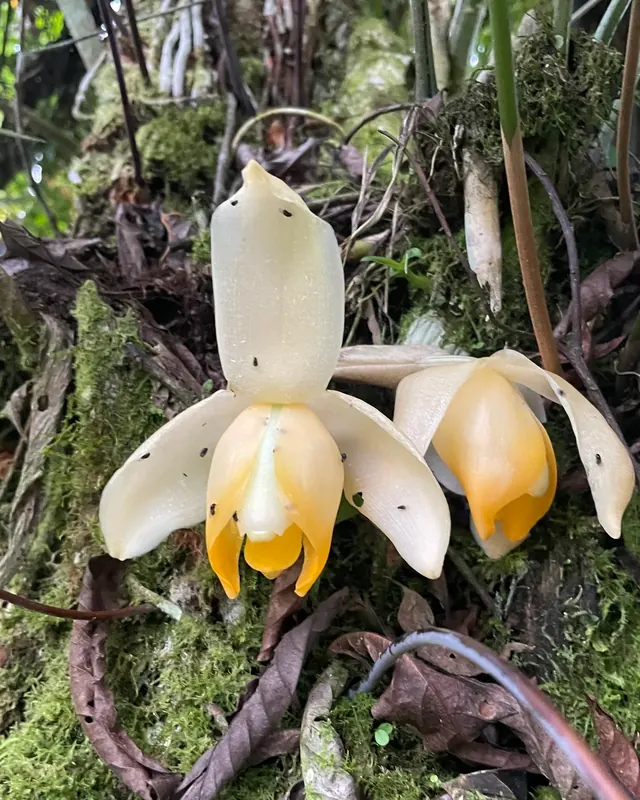
An estimate for the whole reserve; the 2025–2026 surveys recorded 182 species in a small part of it. The forest is rich in epiphytes, with 13 orchid species identified so far. Trees that define it include the canelo (Ocotea pichinchensis) and the wax palm (Ceroxylon echinulatum), endemic to Ecuador and Vulnerable.
62 butterfly genera
Butterflies are pollinators and good indicators of habitat quality. Species recorded include Morpho peleides, Heliconius sapho, Elzunia pavonii and Eurytides columbus.
Field site record: La Hesperia
- Locality
- Km 58, Vía Aloag–Santo Domingo, Pichincha, Ecuador
- Elevation
- 1,100–2,040 m
- Protected forest
- 700 hectares, protected since 1971
- Setting
- Toachi-Chiriboga Key Biodiversity Area, where the Tropical Andes and Tumbes-Chocó-Magdalena regions meet
- Ecosystems
- Evergreen piedmont forest, evergreen lower montane forest and montane cloud forest
- Climate
- 16–30 °C; 2,000–3,000 mm of rain a year
- Birds recorded
- 297 species
- Mammals recorded
- 43 species
- Amphibians and reptiles
- 52 species
- Plants
- 2,000+ species (estimate)
Records kept by La Hesperia reserve. Species counts grow as monitoring continues.
Life in this forest
All photographs were taken at La Hesperia.
A forest that came back
Satellite images of land cover from 1990 to 2022 tell the story. As pasture spread, forest on the reserve shrank until about 2008. Six years later the direction had changed and old pasture was growing back into forest. Cover has held steady ever since, with no clearing detected in the past ten years.
The specialists who surveyed the reserve in 2025 and 2026 found a forest with a complex structure that is well along in its recovery, streams with good to very good water quality, species that cannot persist in degraded habitat, and no evidence of hunting.
What threatens it
Forest loss and fragmentation
Montane forest in the western Andes keeps being cleared for farming and roads. Species such as the capuchin and the clouded tiger cat need forest that stays connected, not isolated patches.
A farmed landscape
Forest, farms and communities sit side by side. When wildlife eats crops or farm animals, people lose income and animals are put at risk. Our coexistence work tests ways to reduce that conflict.
Climate change
Cloud forest depends on a narrow band of temperature and cloud cover. Long-term climate and wildlife records help show how it is changing.
What we do here
Monitoring
Camera traps for mammals and carnivores, records of capuchin behavior, bird counts in farmland, climate records.
Research
Students and researchers carry out their studies in this forest with our supervision.
Education
Field trips and lectures that bring students into the forest.
This work continues because people choose to support it
You can fund it with a donation, or take part in it as a researcher, intern or volunteer.